General Description
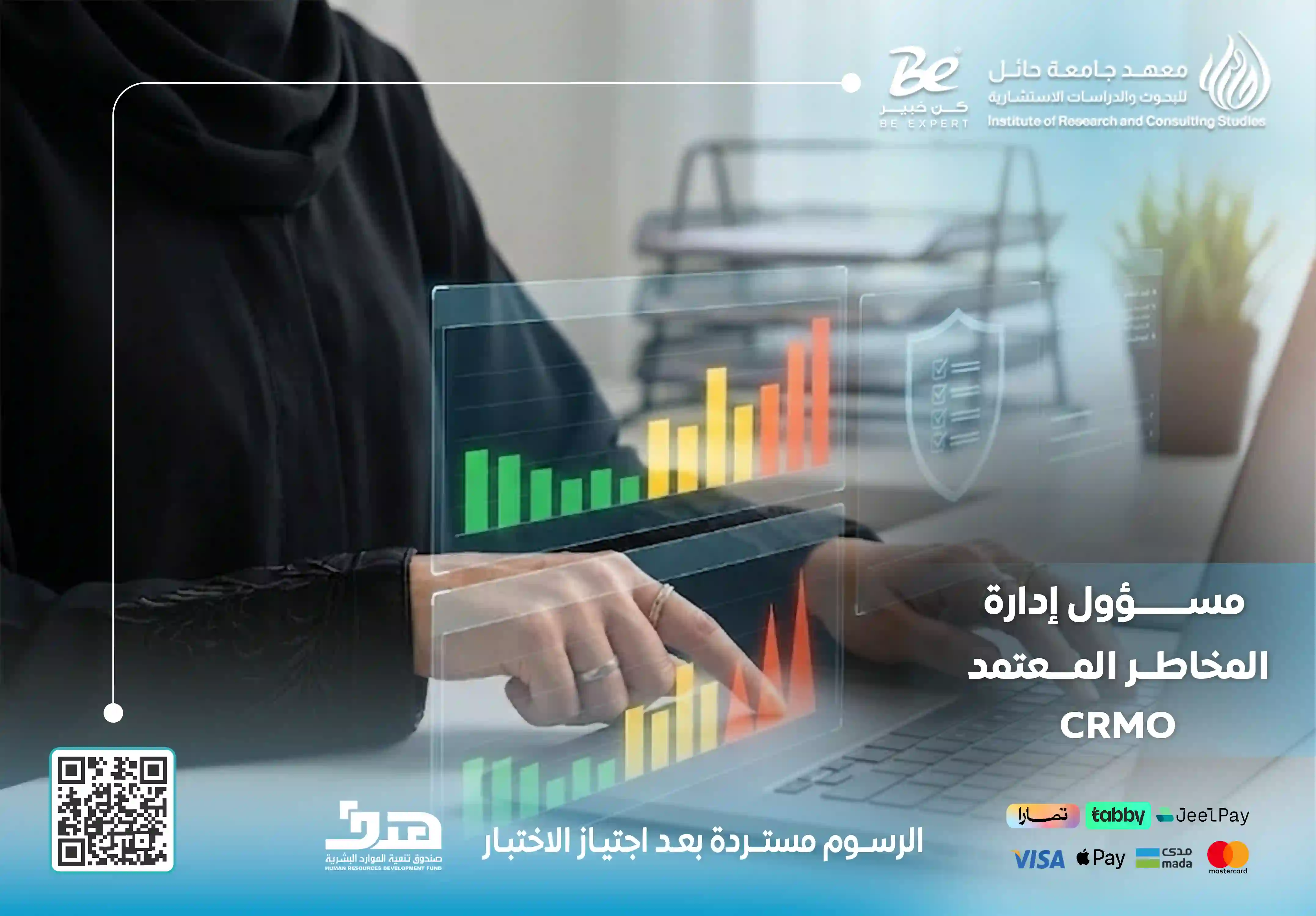
The Certified Risk Management Officer (CRMO) certification is a professional credential focused on developing skills in identifying, analyzing, and managing risks within organizations. It is a specialized program in the field of risk management certification, designed to prepare qualified individuals capable of addressing potential challenges and risks in the business environment. This certification helps holders assess potential risks, develop effective strategies to mitigate them, and enhance business stability and continuity according to best practices in enterprise risk management, making it an important option for those seeking to advance their careers in the field of risk management.
The Certified Risk Management Officer (CRMO) certification offered by the Institute of Research and Consulting Studies at the University of Hail aims to equip trainees with the knowledge and skills necessary to manage risks within organizations efficiently and professionally. The program focuses on understanding the principles of risk management, identifying and analyzing risk sources, and assessing their impact on business operations. It also covers the application of international frameworks and standards, such as ISO 31000 and Enterprise Risk Management (ERM), to ensure business continuity and achieve organizational stability. Participants also learn how to develop effective risk reduction strategies, prepare risk assessment reports, and promote a culture of risk awareness within organizations, which reinforces the importance of this program within risk management certification programs that contribute to supporting organizations and making safer and more sustainable strategic decisions.
The Goals
- Prepare trainees to understand and apply enterprise risk management concepts in the workplace.
- Enable participants to identify potential risks that may affect organizations.
- Develop the trainee’s ability to analyze risks and assess their impact on organizational performance.
- Prepare trainees to create effective plans and strategies to reduce risk impact.
- Enhance participants’ understanding of international standards and frameworks for risk management.
- Support trainees’ readiness to work in risk management, governance, and compliance fields.
- Improve professional competency for those seeking the Certified Risk Management Officer CRMO certification.
Target Auidence
- Professionals working in enterprise risk management.
- Governance and compliance officers within organizations.
- Employees in financial, banking, and investment sectors.
- Insurance company employees and internal control professionals.
- Managers and team leaders responsible for strategic decision-making.
- Professionals in management, planning, and organizational development.
- Consultants specializing in risk management and governance.
- Graduates and professionals aiming to build a career in risk management.
- Anyone seeking a professional risk management certification.
The Features
- A specialized professional certification in enterprise risk management.
- Enhances employment and promotion opportunities in financial, administrative, and government sectors.
- Develops professional risk analysis and assessment skills.
- Provides practical knowledge for handling crises and organizational challenges.
- Builds understanding of global best practices in risk management.
- Supports strategic decision-making based on accurate risk analysis.
- Suitable for professionals seeking career growth in risk management, governance, and compliance.
- Gives certificate holders a strong competitive advantage in the job market.
- Helps organizations reduce the negative impact of risks and improve sustainability.
Topics
- The concept and importance of enterprise risk management.
- Introduction to the Certified Risk Management Officer CRMO certification.
- Types of organizational risks, including financial, operational, and strategic risks.
- Methods for identifying potential risks in work environments.
- Risk analysis and impact assessment.
- Developing plans and strategies for risk management.
- Reducing the negative impact of risks on organizational performance.
- Applying international standards in risk management.
- Modern frameworks for enterprise risk management.
- Crisis management and handling economic and operational changes.
- The role of risk management in supporting strategic decision-making.
- The relationship between risk management, governance, and compliance.
- Applying risk management concepts across different sectors.
Learning outcomes
- Clear understanding of enterprise risk management concepts.
- Ability to identify potential risks within organizations.
- Skills in risk analysis and impact assessment.
- Ability to develop effective risk response plans.
- Understanding of international standards and modern risk management frameworks.
- Improved ability to support strategic decision-making within organizations.
- Enhanced skills in managing crises and operational challenges.
- Readiness to work in risk management, governance, and compliance roles.
- Support for professional growth and preparation for the Certified Risk Management Officer CRMO certification.
Requirements And Conditions
- A desire to develop professional knowledge in risk management.
- Interest or basic experience in management, governance, compliance, or internal control.
- Understanding of organizational work environments and decision-making processes.
- Ability to analyze data and risk-related situations.
- Commitment to studying basic and advanced risk management concepts.
- Readiness to work on practical applications and case studies.
- Successful completion of the required exams or training assessments.
- Communication and analytical skills that support risk understanding and treatment planning.
FAQs
The Blog
What is the CRMO Certification?
The Certified Risk Management Officer (CRMO) is a professional certification that focuses on developing skills in identifying, analyzing, and managing risks within organizations. It is considered one of the prominent risk management certification programs that aim to prepare specialists capable of handling various challenges within institutions. The certification aims to equip professionals with the knowledge and skills needed to identify potential risks that organizations may face, analyze them, and develop appropriate plans to minimize their impact. The Certified Risk Management Officer certification also helps participants understand modern risk management methodologies and apply global best practices in this field, making it an important program within the professional risk management certification pathway.
Importance of the CRMO Certification in the Business Environment
The Certified Risk Management Officer certification holds significant importance in modern organizations, as companies and institutions rely on specialists who can evaluate risks and make strategic decisions based on careful analysis of data and potential challenges. This certification also helps enhance an organization’s ability to deal with crises and economic and operational changes more efficiently. It is an excellent option for professionals seeking to advance their careers in the field of risk management certification and enterprise risk management.
Skills Acquired by the Trainee
The Certified Risk Management Officer program helps trainees develop a range of advanced skills in the field of risk management, including:
-
Identifying different types of risks such as financial, operational, and strategic risks.
-
Analyzing risks and assessing their impact on organizational performance.
-
Developing effective plans and strategies to manage risks and reduce their negative effects.
-
Applying international standards and frameworks related to enterprise risk management.
Career Opportunities After Obtaining the Certification
The Certified Risk Management Officer certification offers broad career opportunities across many sectors, including the financial sector, large corporations, government institutions, insurance companies, and investment firms. It also enhances career advancement opportunities for professionals working in management, governance, and compliance. Holders of the Certified Risk Management Officer certification become qualified to participate in strategic decision-making and manage the challenges organizations may face.
Requirements for Obtaining the CRMO Certification
To obtain the Certified Risk Management Officer certification, trainees need to study the fundamental and advanced concepts of risk management and understand how to evaluate risks and develop appropriate mitigation plans. The program also requires passing training assessments or examinations designed to measure the trainee’s ability to apply risk management concepts in different workplace environments.
Institute of Research and Consulting Studies – University of Hail
The Institute of Research and Consulting Studies at the University of Hail is one of the distinguished educational and training institutions that offers professional programs and courses in various administrative and technical fields, including specialized programs in risk management and professional development. The institute aims to enhance the skills of human resources and qualify them according to the latest international professional standards through specialized training programs delivered by certified experts and trainers, contributing to professional development and improving success opportunities in the labor market.